Author: Mike Cooper

  • The Fridge Arrow

    The Fridge Arrow

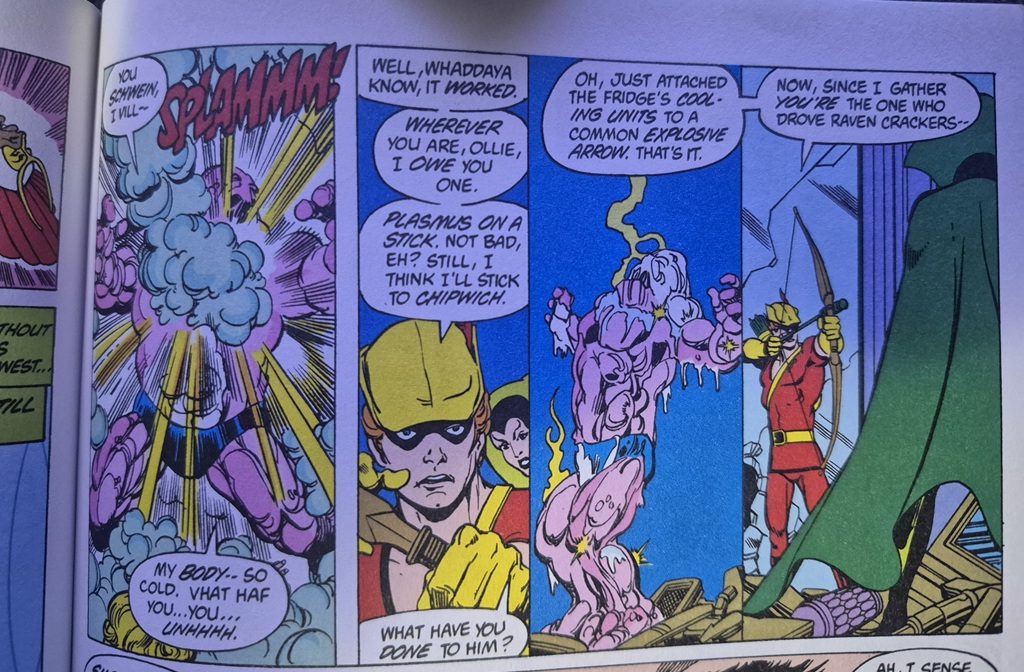
    In Wolfman and Perez’s run on Teen Titans, there’s a moment that always stayed with me. The Titans are being overrun in their base by the Brotherhood of Evil, and Plasmus, a Nazi experiment human-turned-bright-pink-corrosive-jelly blob, is terrorising Fran, Kid Flash’s magnetic girlfriend.

    Speedy stops him dead in his tracks with a trick arrow he jury-rigged from their fridge’s cooling unit, freezing him solid.
    It’s classic superhero science. You stop and think about it – can your fridge instantly freeze 100kg or more of water? Probably not, but it’s a pretty cool moment, in the way that Boxing Glove Arrows are cool.

    Can you pull this off in a game?

    I call this “runtime-socketing”. When you’re performing character maintenance in your base you can slot enhancements in your powers to make them stronger in various ways or add new effects. What if you had powers with one or more free sockets that you could slot at run-time on a mission?

    This also works a little like Champions HERO system’s idea of “Power Pools” where you could buy a number of points that could be changed at any time within whatever parameters you set to simulate nebulous magical powers or shape-changing or whatever.

    You can imagine Doctor Strange putting together a custom spell on the spot to defeat a specific enemy.

    Or imagine Rocket Raccoon of Guardians of the Galaxy, taking cover, fiddling with his guns to clip together a new “supergun” designed to take out the specific target they’re fighting.

    And here we are:
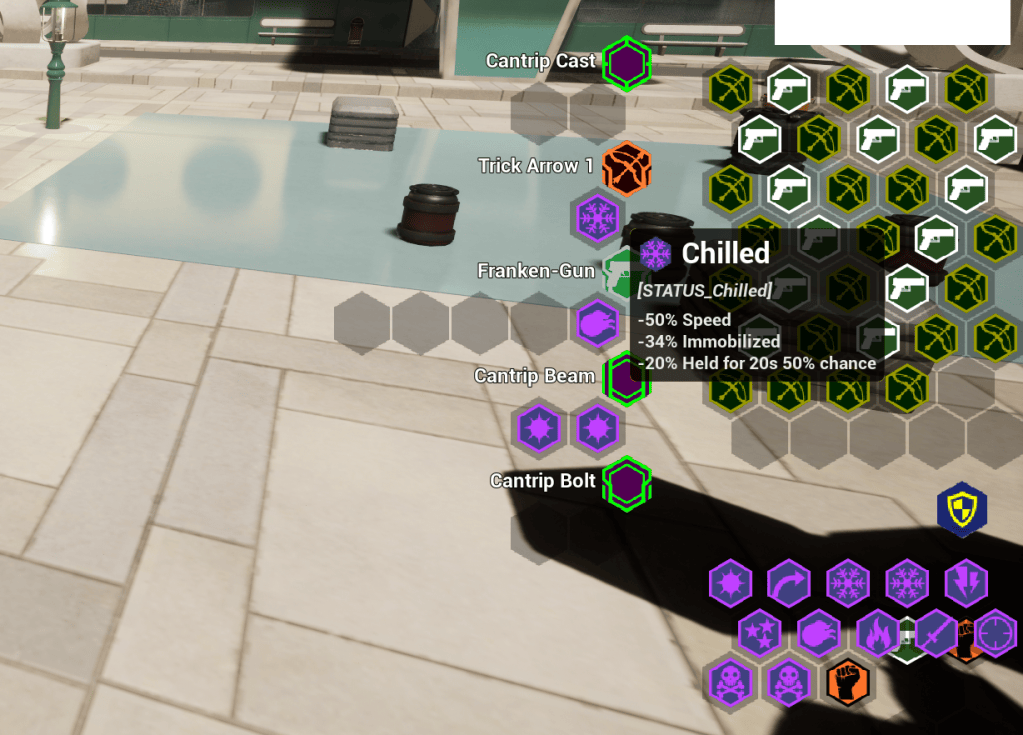
    I’ve set up three powerset to make use of a prototype socketing system with powers.

    Archery will have 5 Trick Arrow powers with 1 socket, and a power to give you access to some basic warheads.

    Spellcasting will have three different “Cantrips”, a beam, a projectile and a direct power, each with two sockets. It will also pack a basic set of spell modifiers as a separate power.

    It additionally gets a couple of light self-and-ally buffs (Blessing and Ward) which have 2 sockets, and there’ll be a component-based power to give you some basics to lot in there.

    Finally, Munitions gets the “Franken-Gun” power with 5 sockets (pending testing… this could get hairy!), allowing you to build your own mega-weapons at runtime.

    You can take these powersets and get by with the versatility of the powers and the basic components offered as powers.

    But you can also do more complicated tricks, such as slotting a temporary use device on your trick arrows e.g. a Stun Grenade device power.

    And you can craft your own superior or custom components to do whatever you like. Do you really want a shrinking arrow? There’ll be a chance to pick up some components that do just that in the game.

    I need to think of a way to salvage components from props, so you can create your own fridge arrow!

    And also get the Vulnerabilities set working, so I can make a jelly villain who freezes solid when they take cold damage.
  • Kitbashing

    Kitbashing

    I remarked to a friend recently that solo projects are the place for bad production decisions.

    That’s exactly what I did this weekend!

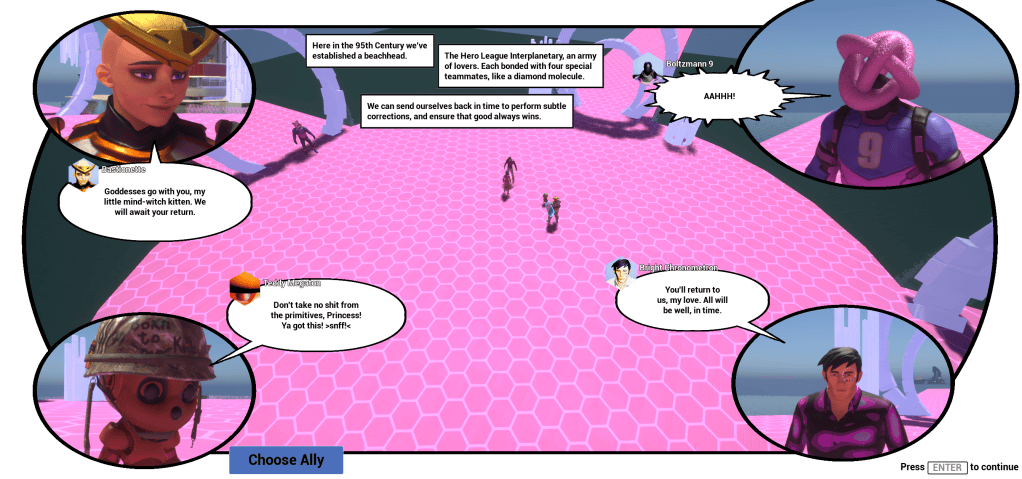
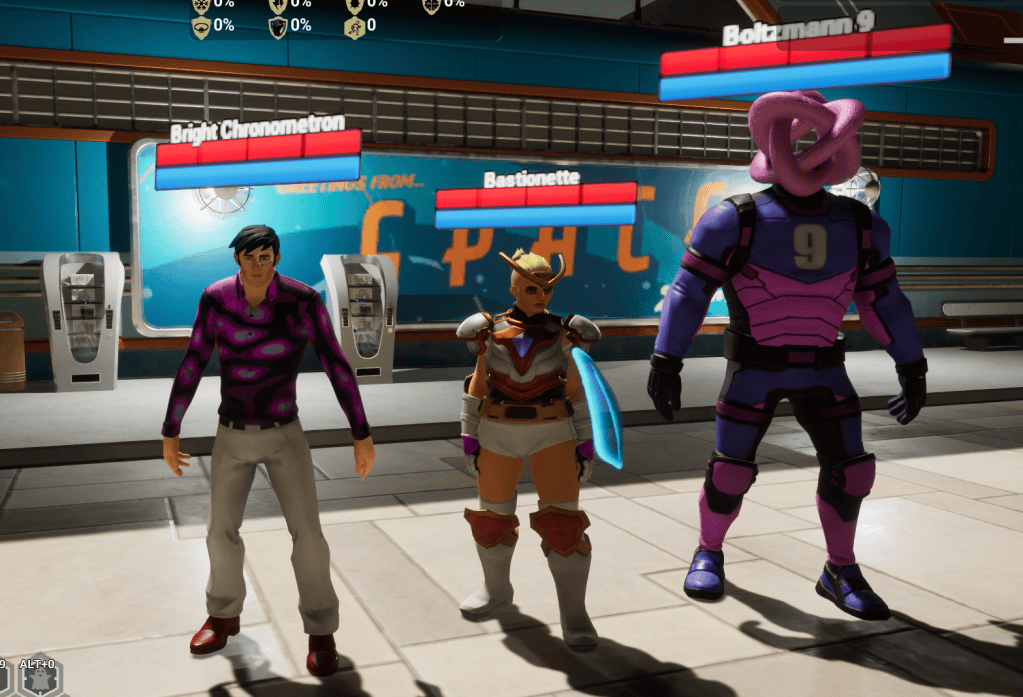
    The title character Esperanto is a 95th C telepath, and I wanted to make a cutscene featuring four of her teammates. These are characters I’d conceptualized way before I started on this game, and thought about the limits of using my own costume creator.

    They are:

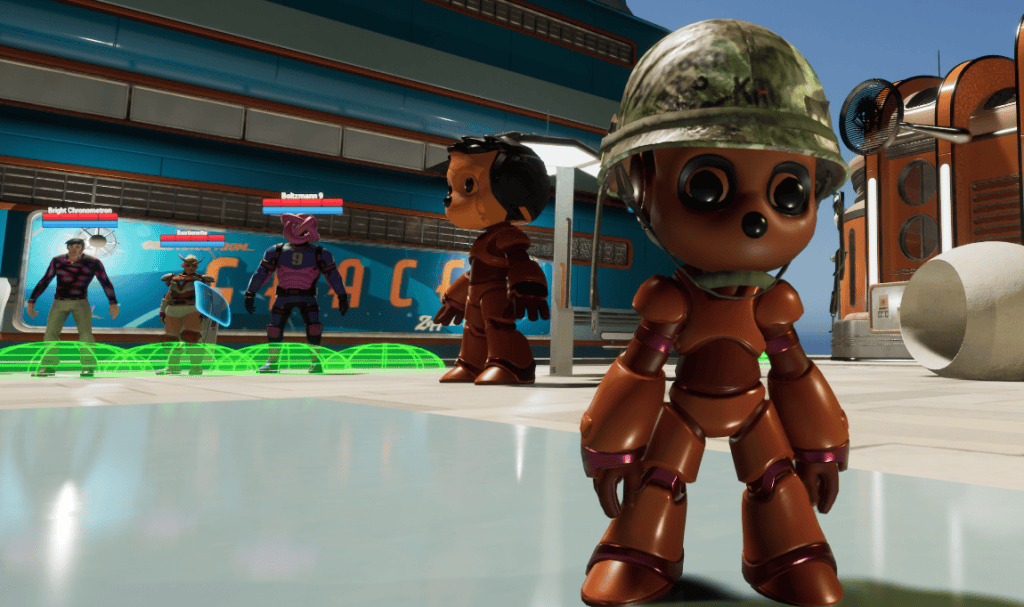
    Bright Chronometron – a tall, slim, handsomely moody Japanese dude with a psychedelic shirt with moving patterns (Like The Doctor from The Authority’s jacket)

    Bastionette – a chunky amazon warrior with bright neon futuristic armor

    Teddy Megaton – a teddy bear in an army hat

    Boltzmann Colony 9 – a giant monstrous figure with no head and a moving pretzel shaped brain floating in mid air, owing a little bit to Validus from the Legion of Superheroes.

    And at this point I have the modular sets by PO-Art from the Fab store to work with. I can programme, create shaders, and do some very simple 3D modelling with primitives in Unreal, but everything else I have to solve using the fine art of kitbashing.

    Oh dear! Shouldn’t be too hard, right?

    Kitbashing means making do with whatever I can find, scrounging around for meshes, textures and whatever helps to bring my vision into the game. When I modded Freedom Force I sharpened these skills by re-purposing game assets. Here I’m working in the wider pool of Unreal Engine, with access to the Fab asset store and other online resources.

    Chronometron was up first. I had slacks, Business shirt (needed to add color support to that which was simple) and a decent hairstyle for him. But… what if his shirt could animate? I took my shader for clothing, which uses an ID texture for color regions, and rewrote a copy of it using a noise function to get some animated oil slide patterns! One down!

    Bastionette was easy enough, with some Knight Armor pieces for her costume, and the body slider system I’d put in place allowing me to make her suitably stocky. An existing energy shield fit perfectly.

    Boltzmann Colony 9 was trickier. I needed to shrink his head down as much as possible with the body sliders, and then add a mesh with an animated pulsing brain texture to cover it. Making the brain shape was easy enough using three torus shapes at perpendicular axes. And searching for “Brain” in my asset folder turned up a “brain coral” material, which I copied and tinted, and then added some texture scrolling and vertex-offset pulsing. I had to set this up as a piece of Equipment, since my costume system didn’t support static mesh accessories, but it worked. I also need a big “9” logo, which lead me on a little detour of making 26 Number and 10 Letter options for logos in Gimp and adding them. I learned a few tricks in Gimp doing that.

    Teddy Megaton gave me most pause. PO-Art had a Chibi set which I’d been eyeing up for a while, so I grabbed that, and had little trouble setting this up as a new body type. It all worked surprisingly well, but did produce a giant 8 foot tall Chibi robot as default! I scaled him down as much as I could, and gave him a permanent level of shrinking as a power. He was now the right size, and looked like a little brown robot. Now I needed a couple of meshes to add on, an army helmet and at the least a teddy bear noise, maybe button eyes too. I found a suitable army helmet on the Fab store for free. I made a Teddy face out of three sphere for the nose and eyes, and set these up as equipment and got them sitting right on him, and the helmet on all other body types too!

    Finally, I did a bit of coding to allow me to make static mesh accessories for everyone, because the equipment solution was all wrong.

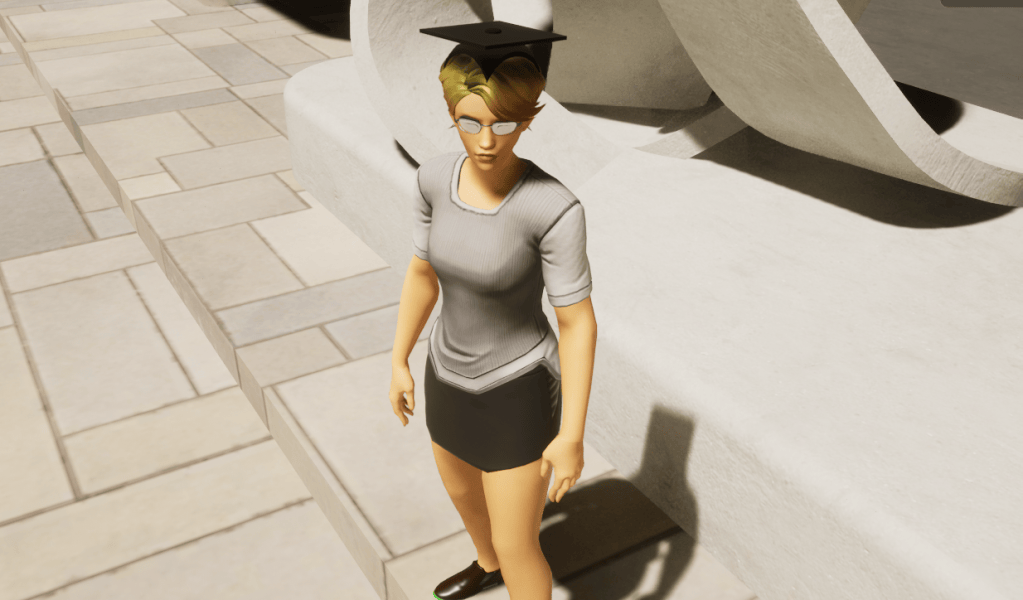
    I figured this out, and celebrated by making a mortarboard hat for Ms. Mind, telepathic schoolteacher, just to go even further off-task!

    None of this has advanced my schedule. I still haven’t finished the cutscene I set out to make, but I do have some new tech and toys to play with!

  • Keeping things moving

    Keeping things moving

    RPG combat can be a big complicated system of buffs, debuffs, resistances and counters for a player to understand and solve. It can also end up being two bags of hit-points, standing in front of each other repeating animations until one of them falls over.

    One of the best ways to break up combat and make it feel alive is to have the characters move around the battlefield.

    I’ve been working on movement powers this weekend.

    What’s the gold standard for super-movement in combat? Maybe the opening scene in X2 with Nightcrawler invading the White House? Quicksilver’s fighting style in Age of Ultron? Have any game systems managed to capture this yet?

    Lunge powers are melee attacks that move the caster towards the target before delivering the attack. I had them working with a number of options, such a teleport attack that positions you exactly behind your target.

    For speedsters, I wanted to extend this so you ran past your target delivering the attack on the way. I added “Lunge Past” option that leave you 10m past your target for these “drive-by” attacks.

    If you have a target, you move towards them (or past them). If you don’t, you move forwards in a straight line. I also have wanted for a long time to make a defensive movement powerset with the simple act that each sprint or teleport gives you a short-lived dodge bonus. Stand still and you’re easy to hit, but keep moving and you’re hard to track and connect with. This seemed to cover both teleporters and speedsters well, but also a great way to avoid combat devolving into a stand still.

    I needed “kiting” behaviour for the AI. I want to specify on a per-character basis a desired minimum range. If the target is too close, they back away. This works well for ranged characters in standard enemy groups – the melee units come forwards to attack the player and the ranged or support units try to stay at range.

    Then add some code so that they can move away using a lunge power, eg teleport away or superspeed sprint away if the player gets too close, rather than just walking.

    What about fliers? I have them moving away but sticking to a ceiling height of 4m above the player when they kite.

    My code for flight movement and lunges was sometimes pushing characters through buildings and other undesirable behaviour, so I added raycasts to avoid that.

    Last on my list was leaping – I did this differently by making the character actually jump, and avoiding the raycast, as its a perfectly viable tactic to jump over an obstacle for a surprise attack.

    I made a number of general-purpose villains to test these powers under AI control, and smoothed out a lot of rough edges.

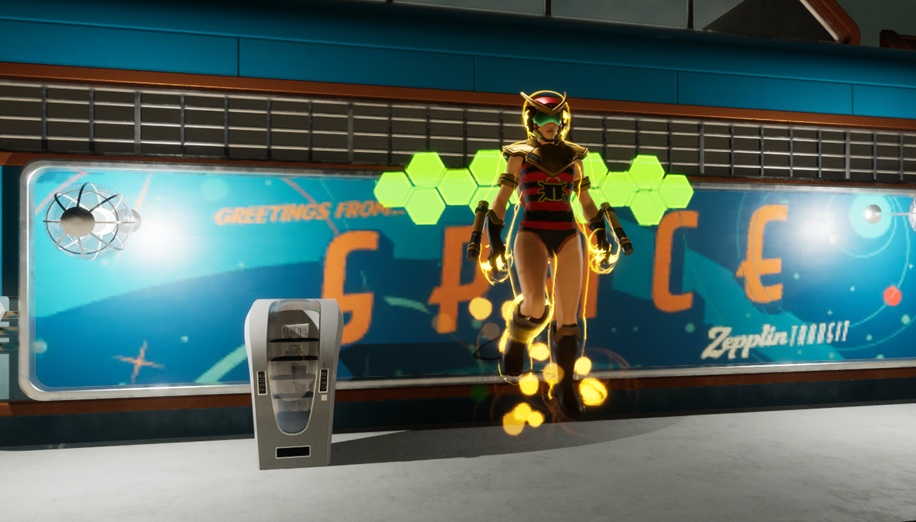
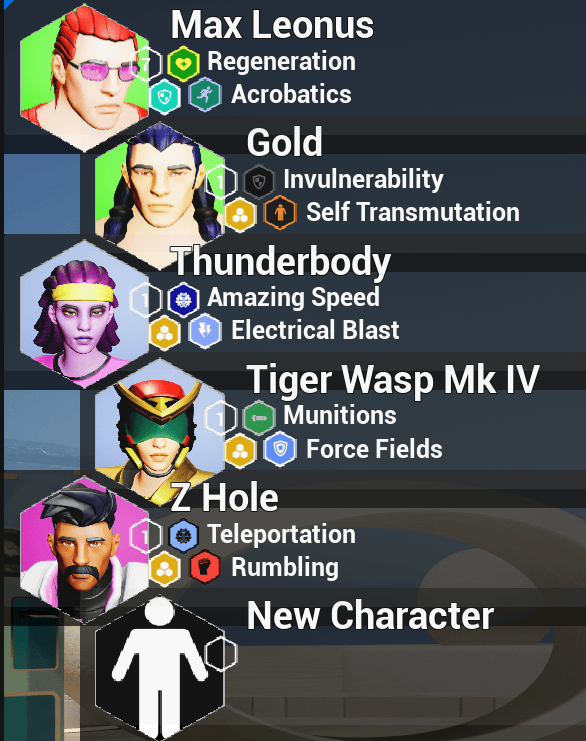
    Gold has Leaping abilities, Thunderbody’s a speedster, Tiger Wasp flies and Z Hole can teleport himself, enemies and throwable props. Max Leonus has Acrobatics. You can see them all in action here.

    I now have the following, all working nicely for both players and AI

    • Superspeed sprint to target, that can also be used for kiting and following. Provides a stacking dodge bonus, so moving around makes you hard to hit, standing still doesn’t.
    • Superspeed “lunge past” attacks where you run past your target and overshoot them while delivering a punch or disarm
    • Teleport behind the target, or teleport away for kiting or closing. Also provides a stacking dodge bonus per use
    • A fly-by punch attack
    • Flying ram attacks that do damage to yourself as well as to any targets you hit along the way. You may want to pair this with a force field or some other defence if you plan on using it a lot.
    • Leaping kick that knocks the target back from a distance.
    • Leaping high jump for repositioning, and stacking dodge buffs.
    • A “heavy landing” that knocks everyone over when you land.

    As a result, combat is feeling much more kinetic with units moving around rather than just standing still and fighting.

    I still need to work on counters to these abilities. Currently if you’re playing a purely melee character with no ranged attacks, you have to lure fliers back down to ground level by running around a corner so they approach you again.

    You can of course buy a simple ranged attack, maybe with some knockback or crowd control to turn off flight. Or perhaps throw environmental props at them? I’m now planning to make everyone capable of throwing objects, with Amazing Strength providing options to throw bigger objects.

    This buys into a more general question for gameplay. You choose your two heroes, and get confronted after that choice with a random supervillain or two while on patrol. There are some good and bad matches regardless of travel powers, eg Gold is bad news for anyone who relies on Crushing damage, but is vulnerable to electrical attacks.


    Possible solutions:

    • I forewarn the player back at base as to who they are likely to face on patrol, so they can make an informed choice.
    • I provide a rich environment for the player to improvise when they face an unlucky pick, eg electrical hazards in the city that they can use against Gold, or small props that can be used to bring down fliers.

    Sounds like something to think about for next weekend!

  • Smash it up, smash it up!

    Smash it up, smash it up!

    Property damage is a key part of the superhero genre. If you’re not punching each other through walls or throwing streetlights like javelins, you’re not doing it right!

    This is what I tackled this weekend, specifically picking up and throwing props as weapons.

    Freedom Force did this really well, with a pick up action that allowed you to carry a car or other throwable above your head, during which time other actions were locked out. You could throw it at a target, delivering heavy damage and knockback, and dropping fliers out of the sky.

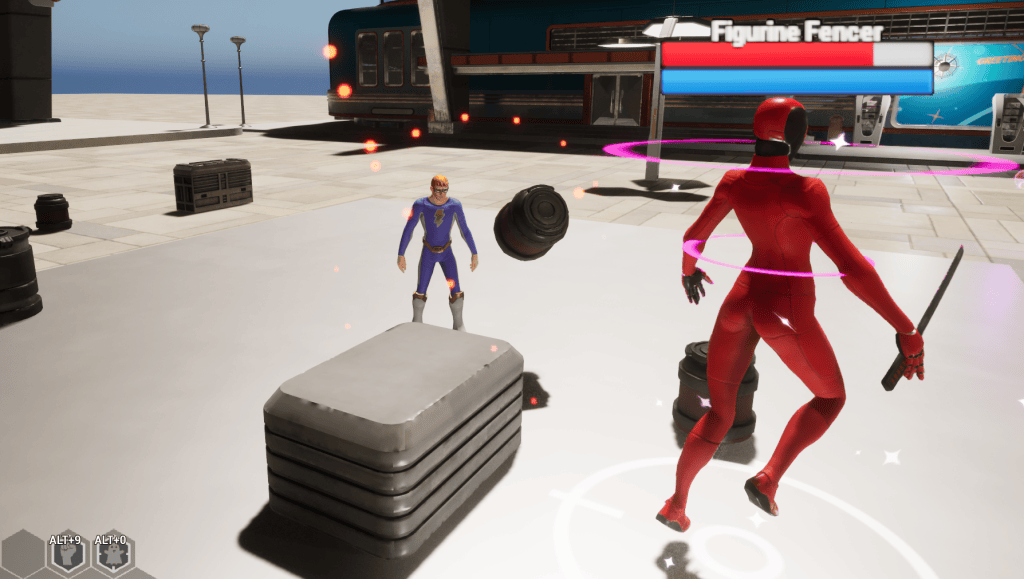
    The author of the Suicide Squad mod for Freedom Force came up with the brilliant idea of spawning an invisible character to pick up and throw objects to simulate telekinesis. I co-opted this idea into my FFX system.

    City of Heroes sidestepped this with special powers Hurl and Propel that summon a physics object for the characters to throw, due to the technical and design challenges of an MMO. These were basically just ranged attacks with some cosmetic trickery.

    Champions Online followed suit from Freedom Force, in a multiplayer environment.

    In the Unity RPGRules engine I wrote, I had this exact pick up and throw mechanic working. Throwable objects had invisible bars on them, the player could approach an object and pick it up if they were strong enough, finding the best invisible bar to grab.

    But on reflection, this isn’t necessarily the best game design option.

    Pick up and throw is a setup-detonate action. You see the nearby prop and it’s a special opportunity. You then need to orchestrate the right distance, clear line of sight and so on to make it work for the pay-off of big damage.

    The two stage action of pick up and throw with lengthy animations mean that by the time you’ve launched your projectile the target is already hitting you, or defeated. Freedom Force allows you to stop time, whereas Esperanto does not.

    I wanted to make it easier and more fluid to grab an object and throw it.

    Unity RPGRules had a TK status effect that worked like this.

    • If you have a primed object, you throw it at the target
    • If the target is a throwable, you prime that object, and it hovers in mid air until thrown.
    • Otherwise, find the nearest throwable object to the target and prime it.

    I decided to replicate that pattern in Esperanto. As for physically picking up and throwing, with the last point being that you find an object near you. I’d get the character to do a one handed scoop animation followed by a throw.

    I figured the easiest way to present this to the player was as a power you can buy. Amazing Strength now has Throw Object. You can enhance it to allow you to pick up bigger objects.

    This way you can keep your target on your opponent, run near a throwable and just double click to scoop and throw in one fairly smooth movement. I still lok you out of using any other powers while carrying a throwable in your hand.

    A whole big task list came out of this…

    1. Get TK working, so you remotely pick up and prime objects, then throw them.
    2. Make the thrown objects do damage on hit, to both the target and themselves
    3. Add mass and conditions
    4. Get Throw Object working using some settings in the TK effect to glue the object to the characters hand and freeze their animation with their right hand up in the air.
    5. Intercept the animation when you throw to be a throw rather than a pick up
    6. Make sure the object’s physics get turned off while you’re carrying it, and get turned on again for the throw.
    7. Add Visual FX eg hovering TK objects get a customisable particle effect on them.
    8. Get the AI to use this sensibly.
    9. Make sure the character drops the held item if they’re mezzed, killed or knocked back.

    The AI of throwing objects

    I use a method called Utility AI. Each power can evaluate how good it is as a single number, with a chosen target, and then a weighted random roll determines which one is picked. That power is then executed.

    The standard Execute code is:

    • Are we within range? Do the power.
    • If not, run at the target to get into range.

    With Throw Object this becomes more complicated:

    • Am I holding an object? If so, throw it!
    • If not, find the nearest object I can pick up and throw. Is it in range? Pick it up.
    • If not, move towards the nearest object.

    This starts to resemble Goal Oriented Action Planning, a more sophisticated AI technique that deals with chained goals. I’ve managed to shoe-horn this behaviour into Utility AI for now, and its working well enough for a first pass, as the video shows.

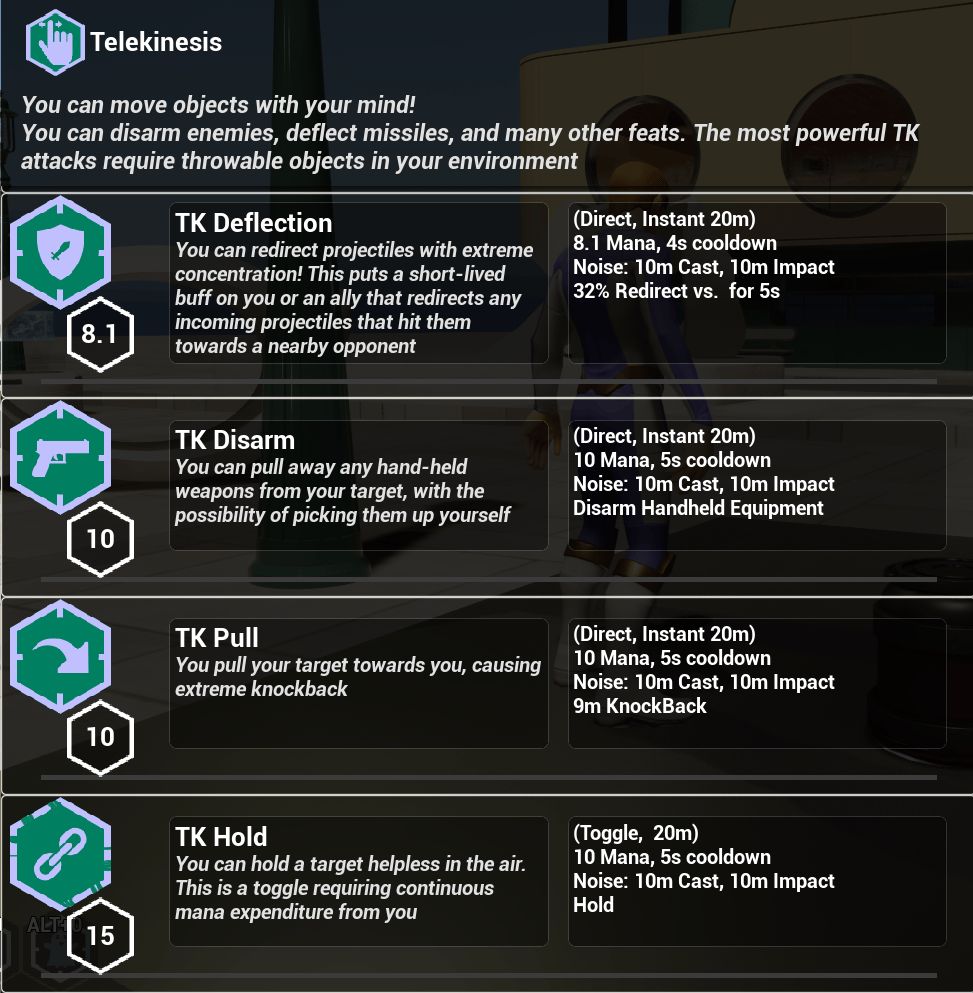
    I then had to make a Telekinesis powerset to support the TK status effect, one which felt distinct enough from the existing Force Fields set. Luckily, I had the pieces pretty much in place for:

    • A direct knockback attack.
    • A reverse knockback equivalent.
    • A TK Disarm that pulls the targets weapon to you
    • A short-lived buff to yourself or an ally that redirects all projectiles for the next few seconds. (If you want better protection, look in Force Fields)
    • A simple passive buff that extends your “Reach” so you can use interactable objects from a distance.
    • A TK hold toggle that leaves the target held in mid air as long as you continue to expend energy on them.

    And that was Saturday!

    I need to make a TK villain for you to fight next!

  • Powers and Builds

    Powers and Builds

    I have this theory about “smooth” and “lumpy” build systems for RPGs.

    It dates back to my teenage years playing the pen-an-paper RPG’s Villains & Vigilantes and Champions. V&V is gloriously “lumpy” – full of big tables and lists of data. Flame Powers could bundle up flight and throwing fireballs, and had different dice rolls from lightning bolts, and so on. It’s like a big toybox full of goodies to explore!

    Champions and the HERO system is an incredibly elegant piece of engineering, in contrast. Both fire and lightning attack are just dice of ranged energy damage, possibly with modifiers attached. You’re guaranteed balance and fairness in that kind of system, and it appealed heavily to my programmer’s mind.

    I’ve built a power system that allows me to assemble any power I want from blocks, just add damage, debuffs, mezzes etc and they’ll all work, and increase the cost of the power appropriately.

    I could let the player’s loose on that, making it smooth like Champions. Or I could create some prebuilt powersets and make it more lumpy like V&V.

    Then there’s character classes and roles in any RPG system. I wanted one of the pillars of Esperanto to be freedom of choice for your character, which means abandoning strict character classes. Ideally, if you really want Flight and Invulnerability and Heat Vision and Amazing Strength and Electrical Blasts, you can have them all. But you won’t be as good as someone who’s specialised in just one of these things.

    Here’s what I’ve came up with:

    Powers are arranged in thematic powersets, designed by me. I’m going lumpy. I was partly inspired to do this by playing City of Heroes, which has character classes with well defined powersets. I realised there’s a certain joy to picking through these pre-defined goodies with their idiosyncratic powers (I’m looking at you, Stone Armor!) and making what you can from them.

    In Esperanto, players can choose any power from any powerset for their character, but…

    Each character has:

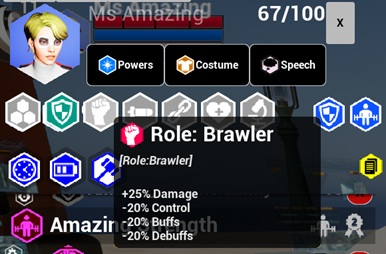
    • a Role that modifies the effectiveness of powers, eg Tanks get better values for self-defence powers, but lowered damage and mez values
    • a Primary powerset, whose powers operate at +50% effectiveness
    • a Secondary powerset, whose powers operate at +25% effectiveness
    • two Tertiary powersets at base values
    • any other powers operate at -50% value ie half strength

    If you have an idea for a character who’s main thing is being invulnerable, you can choose Tank role and Invulnerability as your primary powerset, and you’ll be very tough out of the box. Your damage output won’t be stellar, at least not compared to a character with a primary damage set and the Artillery role.

    Choosing your Role, and each of the four main powersets for a character is an investment in certain aspects at the expense of others.

    Example

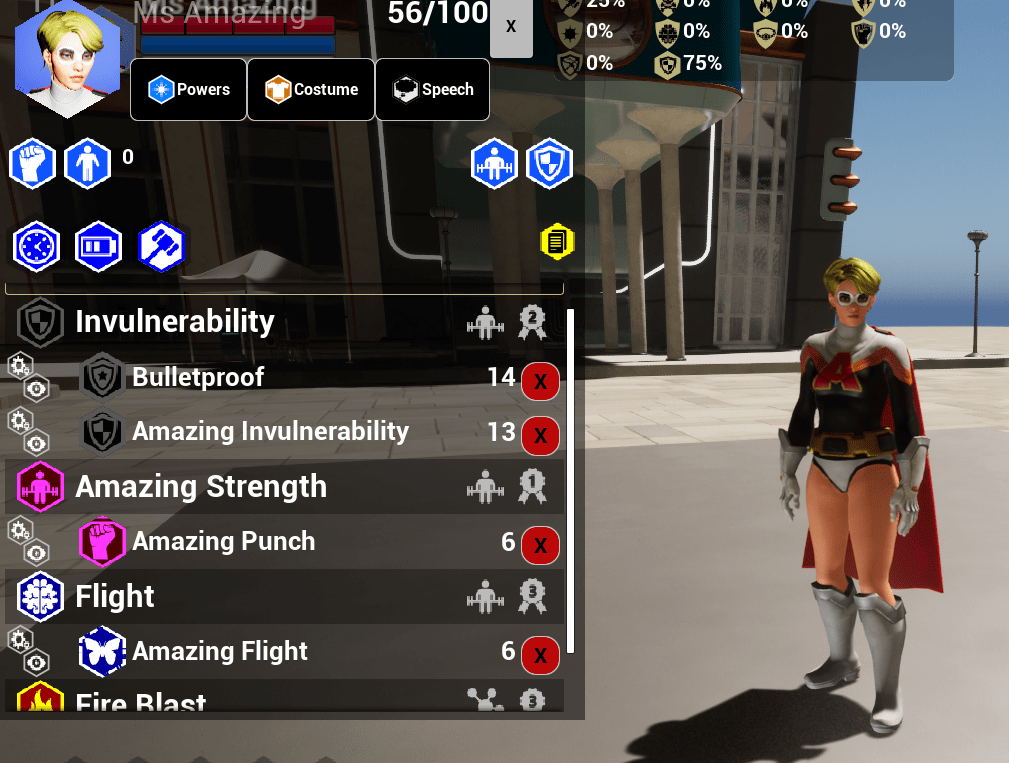
    Let’s have a look at the popular and classic combination of Invulnerability and Super-strength.

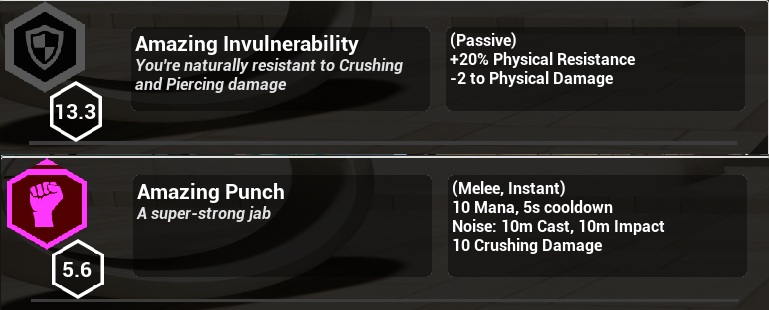
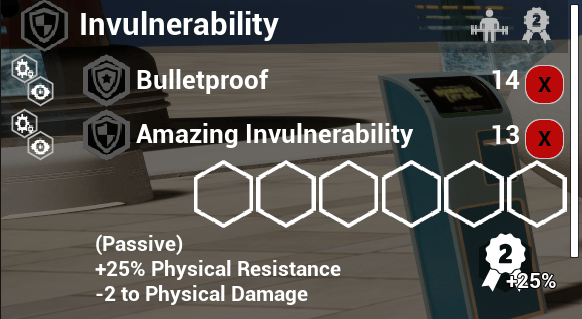
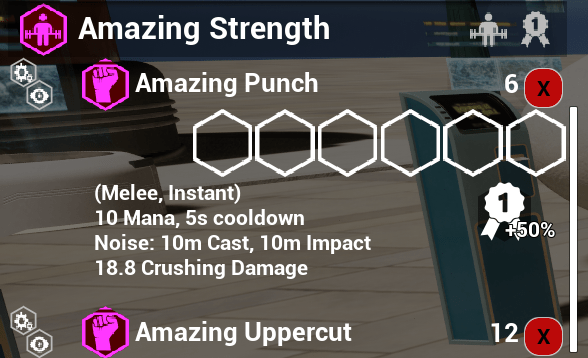
    The base values for Amazing Invulnerability and Amazing Punch are shown below: 20% resistance and 10 damage respectively.

    We can see how these change if we select different roles.

    Selecting the Tank role increases the resistance and decreases the damage exactly as advertised.

    The values shown in the power selection screen reflect the Role you’ve currently selected. Notice that the cost of the powers has not changed.

    The values in your character screen when you’ve selected may be different yet again, depending on whether you’ve selected the powerset as your Primary or Secondary.

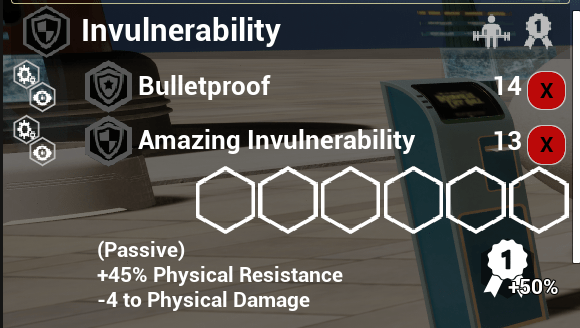
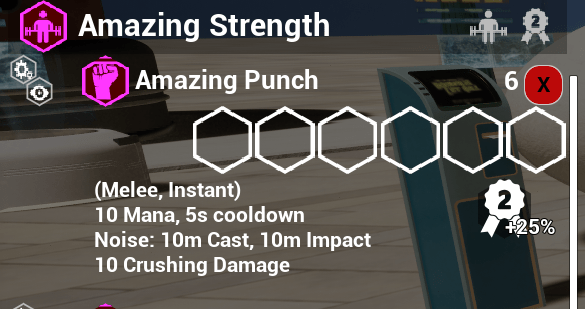
    If you chose Invulnerability as your primary, and Amazing Strength as your secondary they would look like this. The values for your Primary get multiplied by a further +50%.

    20% (base value) * 1.5 (Tank Role) * 1.5 (Primary) = 45%

    And the values for your secondary get multiplied by a further +25%

    10 (base damage) * 0.8 (Tank Role) * 1.25 (Secondary) = 10

    If we decide to make our character more offence based we could make Amazing Strength our Primary, and switch to the Brawler Role, intended for melee damage characters.

    Our physical resistance is now

    20 * 1 (Brawler Role) *1.25 (Secondary) = 25%

    And our damage with Amazing Punch is

    10 * 1.25 (Brawler) * 1.5 (Primary) = 18.75

    Adding enhancements will also increase the strength of these powers, but unlike Role and Primary/Secondary choices, these will increase the points cost of the powers.

    Basic enhancements will typically double the strength of the powers, but the crafting system will allow you to make even more powerful enhancements.

    This allows the same base powers to scale depending on your character’s strengths, whether invulnerability is their main superhuman trait, right down to a street level hero wearing a bulletproof vest.

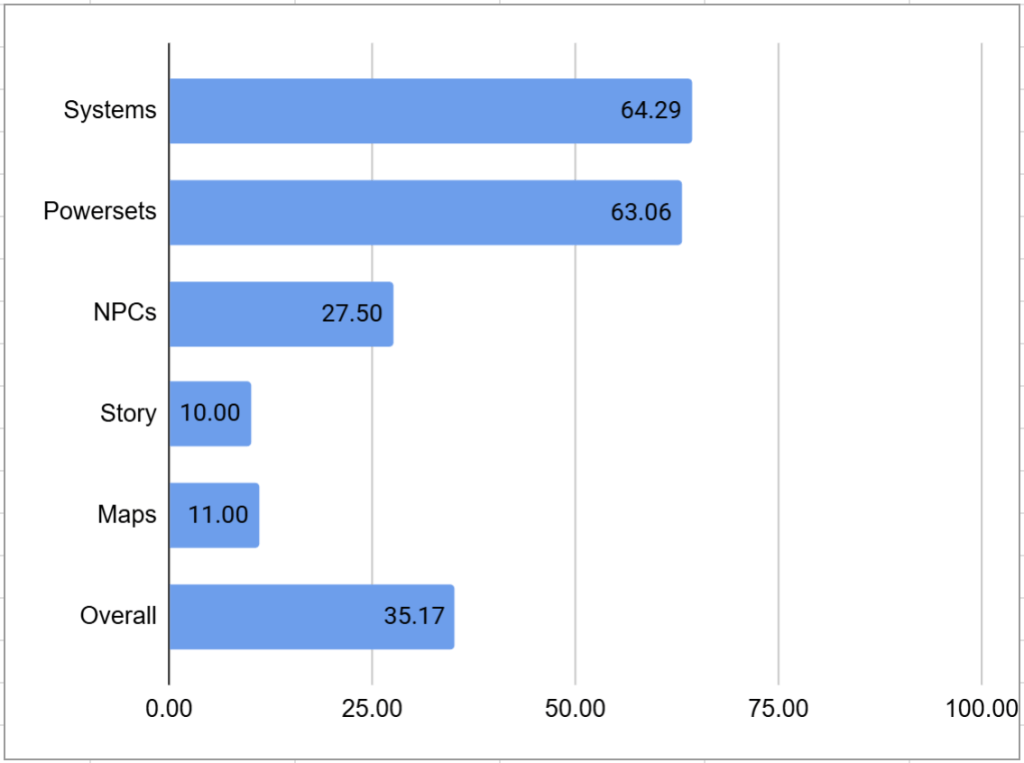
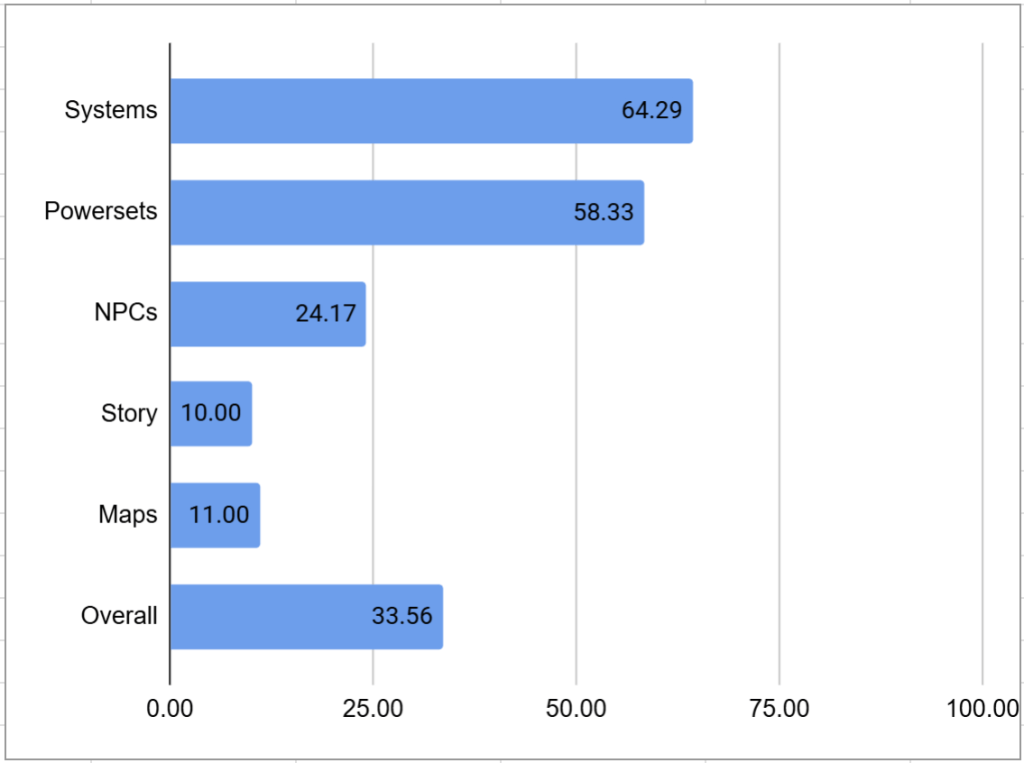
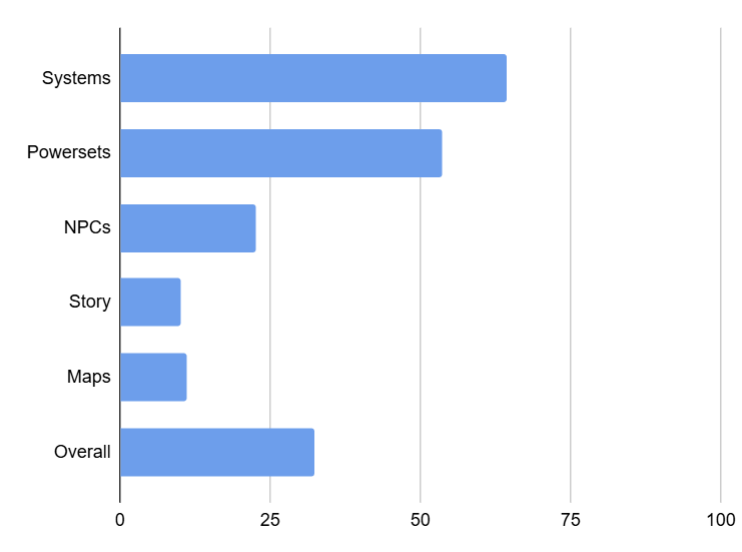
    Project Progress Snapshot

  • Manifesto

    Manifesto

    Welcome to Games from the Life Star!

    This is my mostly one-person games company.

    I’m the programmer, designer, producer and art director, but I call on some amazing friends to help me with art tasks that I can’t do myself.

    I’m building the best superhero simulator I can here. I aim to capture not just the strange powers and combat, but the storytelling and soap opera that the genre is famous for in an interactive entertainment experience.

    In the universe of my games and comics, the Life Star is an inter-dimensional satellite that docks with the Earth to upgrade it, slowly turning its human population into superhumans.

    Using the amazing technology and resources available to game developers today, I intend to do the same, and let my players be superheroes!